Images from Trips to Mexico
Blog

Top 10 Reasons to Visit Oaxaca!

August 16th, 2010


1. Learn about Ancient Civilizations

High on a hilltop overlooking Oaxaca City lies Monte Alban, an ancient Zapotec city that was inhabited for about 1,300 years. Monte Alban, was the center of Zapotec civilzation, where great achievements were made in writing, symbols, calendrics and astronomy. Following the demise of Monte Alban, surrounding city-states, or independent kingdoms in the Central Valley, filled this vacuum. Remnants of these ancient cities are visible today at sites just outside of Oaxaca, including Mitla, Zaachila, Yagul, Lambiteco, and Dainzu.

Oaxaca offers the traveler the opportunity to learn about the birth of civilization in Mesoamerica. In Southern Mexico, early humans evolved from being nomadic hunter-gatherers to creating village settlements, with the beginning of agriculture.  Agricultural life did not just “happen”. It was the result of conscious engineering of a singular plant—corn, which allowed for the dawn of civilization. The domestication of corn was the revolutionary event that transformed society from nomadic hunter/gatherers in search of food, to rural village settlers and eventually to small town inhabitants and cosmopolitan urban living in cities such as Monte Alban.

2. Visit Indigenous Communities

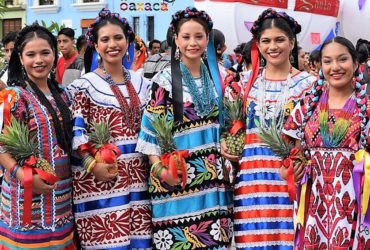
Travel to Teotitlan del Valle, and don’t forget to say, zac xtil, when you arrive in the morning hours. Meaning good day in Zapotec, the members of the community going to the market or in their homes weaving will graciously reply back, zac xtil. Oaxaca is a kaleidoscope of ethnic groups, each having a common and unique language. In addition to sharing a common language, people’s identity is also expressed through dress, geographic location and customs.

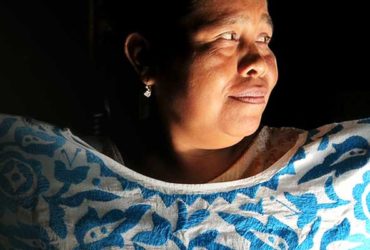
The largest populations are the Zapotec and Mixtec. Other groups include the Amuzgo, Huave, Mixe, Triqui, Mazateco, Chinanteco, and Chatino. This vast array of ethnic groups is the result of a rugged topography that contributes to isolation and which has contributed to cultural and ethnic preservation, as well as contributing to marginalization, with less accessibility to essential goods and services, such as medical care and quality education. Dress is a readily identifiable communicator of ethnic identity, where the wearer communicates to the world, “I am a Triqui woman, or I am Amuzgo”, based on their weaving techniques and/or dress ensemble. As the forces of globalization bring homogenization, many of these cultural expressions and identifiers are disappearing.

3. Explore the Ethno-Botanical Gardens

In addition to its vast cultural diversity, Oaxaca is one of Mexico’s states with the greatest biodiversity. This is no accident, as the cultural and bio diversity are integrally linked. The mountainous peaks of Oaxaca are the southern extremes of the two Sierra Madre chains that flank the entire country. They drop off to sea level at the Isthmus of Tehuantepec, later to emerge once again as one travels into Chiapas.

Oaxaca’s vegetation zones include: savannas, deciduous tropical forest, pine-oak forests, tropical evergreen forests, tropical rainforest, arid tropical scrub, cloud forest and the high coniferous forest. If you don’t have time to traverse the entire state, we suggest a visit to the Botanical Gardens in Oaxaca City. Founded in 1993 by Francisco Toledo, the gardens are beautiful, and most importantly they represent a vital rescue and maintenance of many of Oaxaca’s native plants. Here, one can see teosinte pre-domesticated corn, a vast collection of cacti and agaves, important medicinal and natural dye plants. No visit to Oaxaca would be complete without a visit to this very special sanctuary for plant life.

4. Explore Bustling Markets

Did you know that the market system in Oaxaca has been in existence since the pre-hispanic times? The “tianguis” is an open air market, temporary market that is held on certain days in a particular town. This bazaar tradition has its roots well into the pre-Hispanic period and continues, essentially unchanged, in the present day. It was the most important form of commerce in the pre-Hispanic era , and following the Spanish Conquest, this social and economic tradition has remained in tact. Our favorite market towns and days are:  Tlacolula on Sundays, Ocotlan on Fridays, Zaachila on Thursdays, and Etla on Wednesdays.

While tourists love to come see the markets, they do not exist FOR tourists. They are vital social and economic institutions that encourage community and personal bonding and provide economic sustenance to community members as they engage in commercial trade of goods. These goods range from produce, flowers, and baskets, to ready to eat food—nopal salad, quesadillas with squash blossoms, bread, meat, chickens, grasshoppers, spices, herbs, commercial housewares and many other consumer basics. They are offer a dazzling display and experience for us travelers who are more accustomed to shopping the gentile and orderly aisles of our local grocery store!

5. Savor Mole and Regional Cuisine

No destination can boast like Oaxaca, when it comes to culinary traditions. While it is commonly referred to as the Land of the Seven Moles, I like to call it the land of a thousand moles, as each mole is as unique and different as the family/person that made it. So, what is mole? Pronounced “MO-lay” the word comes from the Nahuatl (Aztec language) word “mulli”, which means, sauce, mixture, stew, or concoction.

In its pre-Hispanic form, this stew was made of dried chiles, tomatoes, seeds, and chocolate. The king of all moles is the complex black mole, made from over 30 ingredients. The chiles in the recipe alone include; guajillos, pasillas, anchos, and chipotles. Other ingredients include: peanuts, cinnamon, raisins, plantains, chocolate and various herbs.

Oaxaca boasts more ways to eat and drink corn than you can shake a corn husk at: tamales, tlayudas, tortillas, memelas, empanadas, enchiladas, chilaquiles, and if you just want corn, you can get grilled or boiled corn on the cob or “esquites” corn kernals in a cup with lime, mayonnaise, salt and chile (yum!). If you want to “drink” your corn, just ask for tejate or atole, the original energy drinks. The famous Oaxaca, stringy cheese is delicious melted in a tortilla with squash blossoms. Nopal salad (prickly pear) with onion, tomato, cilantro is also delicious and very nutritious. If this is not enough, top it all off with a taco filled with “chapulines” (grasshoppers!). It is said, “if you eat a chapulin in Oaxaca, you will return”. You may want to wash all of this down with a fine mezcal!

6. Meet Talented Weavers and Dyers

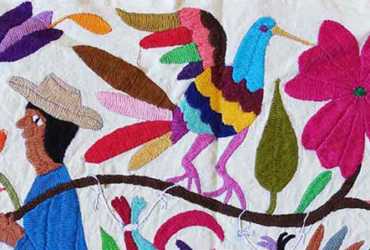
For over 2,000 years, the people of Oaxaca have been spinning, dyeing and weaving.  In past times, fibers were cotton, ixtle and silk; dyes were cochineal for reds, wild marigold plants for yellows, purpura pansa mollusks for purples and numerous other wild flowers, nuts, seeds, lichens, etc.  Weaving was done using the backstrap method, where the weaver strapped a belt around their back with the working end of the loom near them and the other end tied to a tree.  Using this system, the weaver could move their body slightly forward or back to increase or decrease tension on the loom.  While these methods are still used today, adaptations have always been present and sometimes necessary, resulting in a creative “tension” between tradition and evolution. 

In Teotitlan del Valle, 30 minutes east of Oaxaca City, the entire community is dedicated to the tradition and art of weaving stunning tapestries.  Using floor / pedal looms and wool fiber, introduced by the Spaniards, the community maintains a tradition that is over 2,000 years old.  Initially utilitarian items such as blankets and clothing were created, but now they have adapted their weavings to items of aesthetic beauty such as wall and floor tapestries.  One of our favorite coops is the Centro de Arte Zapoteco Bii Dauu, (meaning sacred wind or breath in Zapotec), where members, such as Mariano Sosa, Rafaela Ruiz, Fausto Sanchez, Margarita, Procolo, Gervasio and the others are dedicated to the preservation of family and community traditions, as well as the environment.  Other favorite regions of Oaxaca with amazing weaving traditions include:  the Amuzgo in the mountains north of the Costa Chica,  the Huave of Santa Maria del Mar in the Isthmus, the silk rebozo weavers of the Sierra Juarez, the weavers of the Costa Chica region of Pinotepa de Don Luis and San Juan Colorado.  Each community has a unique weaving pattern and dress, from the “posahuanco” purple, indigo and red wrap skirt Pinotepa de Don Luis to the intricate backstrap woven “huipiles” of the Amuzgo.   In Oaxaca City must see stops include:  The Museo Textil de Oaxaca (MTO),  and Remigo Mestas shop, where he showcases and sells exquisite revival weavings and dress from Oaxaca.  His high end revival weavings are worn by women in Mexico City and San Miguel Allende, hence his local name:  Remigio Armani!!

7. Meet Artisans and Buy Crafts

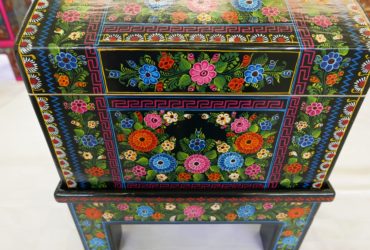
The Southern Valley is known as “the craft route”.  Artisan communities include:  San Bartolo Coyotepec, where Dona Rosa made black pottery famous in the 1960’s.  Her family continues the tradition of attracting tourists to their large workshop and showroom, where they demonstrate how this pottery gets its black color (oxygen reduction during the firing stage).  They also demonstrate the pre-hispanic method of introducing shine to their wares, through a technique called burnishing, where a stone or another piece of pottery are used to rub the object prior to firing.  This brings the object to a high sheen or luster.  Glazes were later introduced by the Spanish.  

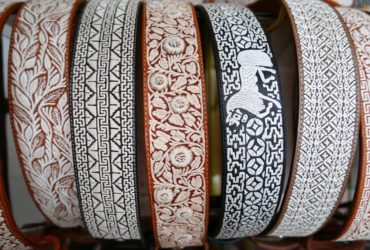
Traveling along the route, one arrives in San Martin Tilcajete, known for the whimsical animal and “alebrije” wood carvings.  Alebrijes are fantastical drangon-like  figures.  While many townspeople are dedicated to carving figures from copal wood, each has their own style and recognizable figures, from rabbits, to dogs on bicycles, lanky and lurching cats, and imaginary, whimsical creatures.  A fun community to visit is Santo Thomas Jalieza, where one can find sellers in the central kiosk selling colorful and fun cotton hand woven belts, bags and table runners.  As one gets closer to the town of Ocotlan, home of Mexican painter, Rodolfo Morales, the Aguilar sisters can be found with their large, outrageous pottery figurines depicting market scenes, domestic settings and their most famous “women of the night”.  There is something for everyone on Oaxaca’s southern craft route.  

The Eastern Valley takes you towards the legendary weaving communities of Teotitlan del Valle and Santa Ana del Valle, where the constant “clack-clack, clack-clack” sound of the treadle looms can be heard as weavers continue a tradition dating back over 2000 years.  Initially, blankets of cotton were woven on backstrap looms, however, when the Spaniards arrived, sheep (wool) and floor/peddle looms were introduced.  Teotitlan del Valle weavers are known for their adaptation to social and economic shifts.  Today, they weave some of the finest naturally dyed tapestries in Mexico.  

8. Learn of the Modern and Graphic Art Traditions

Oaxaca was the birthplace of several of Mexico’s most talented modern artists:  Rufino Tamayo, from Oaxaca City, Francisco Toledo from Juchitan in the Isthmus of Tehuantepec and Rodolfo Morales, from Ocotlan, in Oaxaca’s Central Valley.  These artists have done great things in their home state of Oaxaca, to promote and preserve art, culture, and nature and to help develop and stimulate future artists, musicians, photographers.  

Francisco Toledo, considered one of Mexico’s greatest living artists, has sponsored and funded most of Oaxaca City’s cultural and arts venues, such as the Taller Arte Papel Oaxaca, Instituto de Artes Gráficas de Oaxaca (IAGO), CASA (Centro de Artes de San Agustín) en Etla, Centro Fotografico Manuel Alvarez Bravo, Jardin Botanico, and the Casa de la Cultura in Juchitan, among other institutions.  In Juchitan, the Zandunga dance and music can often be heard from behind the walls of the Casa de la Cultura.  In Octotlan, Rodolfo Morales lovingly restored the town church and convent, which now houses the Rodolfo Morales Museum.  Travel to Oaxaca City and you can occasionally spot Master Francisco Toledo sipping a coffee or mezcal in a local venue.  Much of the city’s artistic and cultural vibe are in large part due to his vision and execution of outstanding cultural centers.   While Francisco Toledo has worked in almost all media, he is primarily known for his monotone Graphic Works, that demonstrate his dedication to the study and discipline of the craft of lithography and print making.   His works fuse the mythical world with the real world.  On the other hand, Rodolfo Morale’s colorful and vibrant oil paintings often depict women, angels, dogs, or weddings, in the “magical realism” tradition.

9. Discover Colonial Churches

After the physical conquest of Mesoamerica by the Spaniards in the 1520’s,  the spiritual conquest, or evangelization took place.  In Oaxaca the Dominicans were predominant, followed by the Franciscans and Augustinians.  Churches of the colonial period (1521-1821) dot the region and are predominately in the Mexican Baroque style; they include,  Santo Domingo Church and Convent, Basilica de Nuestra Senora de la Soledad, Main Cathedral, San Felipe Neri, San Jeronimo Church in Tlacochahuaya, Chapel of the Senor of Tlacolula and numerous others.  There are over 20 colonial era churches in Oaxaca City, alone.  

You are likely familiar with the Virgen of Guadalupe, the patron saint of Mexico, who is commemorated on December 12, nationwide.  But, in Oaxaca, it’s the Virgin of La Soledad (solitude or loneliness), patron saint of Oaxaca, who is commemorated on December 18.  

According to legend, in 1620 a mule train camped outside the city of Oaxaca and noticed an extra mule that did not belong to the anyone in the group. The mule refused to move and when prodded, rolled over and died. When the pack it carried was opened, a statue of the Virgin of Soledad was found.  Taking this as a sign from heaven, the inhabitants built a shrine, later a church and finally the imposing basilica which stands today on the spot where the statue first appeared.

Because of this miraculous selection of Oaxaca by the Virgin, she became the patron of not only the city but the entire state, as well as of the mariners who sailed to and from her ports. The special devotion of the sailors was so important that many walked from the coast to worship at her shrine.

10. Experience Annual Festivals

To talk about festivals in Mexico, one would need to include virtually each day of the year!  However, to help wrap our arms around the meaning and proliferation of festivals in Mexico, I asked Anthropologist Marta Turok to help out.  Here is what she said: “A fiesta is a collective event that requires extensive planning to orchestrate all the people taking part in it. The sponsor is a “mayordomo”or “carguero” and there are musicians, dancers with costume, kitchen helpers and fireworks. The sponsor pays for most of it, and depends on all of his family and “compadres” to help out. It is considered in economic terms as a way of redistributing accumulation in exchange for prestige and being considered a good citizen. Traditional dances with masks and costumes are important because those who participate do so because of a “manda” or promise to the Saint in exchange for health and other favors.  In Mexico there are four kinds of religious/ritual fiestas:
1. Festivals that revolve around the agricultural cycle
.  These have strong pre-Hispanic roots, due to the importance of maize as the base of Mesoamerican culture. Over time, fertility, rain and other ancient gods transformed into Christian Saints and Virgins.  
These festivals are observed as a two-part or period system, revolving around the seasons.  For example, fall and winter fiestas occur at the end of the harvest, from Day of the Dead up to the Sun Cult, flagellation and penitence observed through Holy Week. Spring and summer fiestas occur during the rainy season in answer to the rain propitiatory fiestas that begin with Dia de la Santa Cruz (May 3) and end in many cases with San Miguel Arcangel on September 29th.
 
2. Fiestas in honor of patron saints
: founding of villages, reinforcement of community ties.  These fiestas reinforce community ties, where the “mayordomo” as sponsor of the Fiesta is in charge of the fiesta organization, drawing on “compadres” and other relatives to procure food, music, fireworks for participants.  A great deal of planning, financial allocation and community reciprocity takes place for these important fiestas to take place.  Honor, prestige and economic transactions are important outcomes of these fiestas. 
 
3. Fiestas of saints and sanctuaries related to miraculous apparitions and pilgrimages: These fiestas are also intimately related to pre-Hispanic deities and places of cult where there were springs, sacred caves, “cenotes” or cross-roads.  For example, the Virgin of Guadalupe-Tonantzin (our mother), the Señor de Chalma - Oztoteotl dedicated to Tezcatlipoca, smoking mirror and The Virgin of Juquila are important pilgrimage destinations at specific times of the year in Mexico. 
 
4. Fiestas associated with the family life cycle: baptism, confirmation, coming out: importance of godparents, family ties as first circle, in parallel to community ties.   

Our favorite festivals and observances in Oaxaca include:  Day of the Dead, The Velas of Tehuantepec, Night of the Radishes/Christmas in Oaxaca, including December 12 in honor of the Virgen of Guadalupe and December 18, in honor of The Virgen de la Soledad, Oaxaca’s patron saint.  Based on Marta’s outline, we now know what type of festivals each one of these is!


Want to see more of Oaxaca? Check out Jeff Schneiderman’s photos of Oaxaca!

Emiliano Zapata

November 10th, 2009

Background

Emiliano Zapata, was born in the state of Morelos in 1879.   He grew up during the “Porfiriato” era, named for a period of political and economic domination of Porfirio Diaz, who ruled Mexico for almost thirty years, beginning in 1876.  The social system of the time was a capitalist / feudal system, with large landed estates, known as haciendas.  The landed elite began to control more and more of the land, squeezing out the independent communities of the indigenous population, who were subsequently forced into debt labor on the haciendas. Under Díaz, close confidants and associates were given offices in districts throughout Mexico. These officials became enforcers of “land reforms” that drove the haciendas into the hands of progressively fewer and wealthier landowners.

Zapata became a leader in his home town of Anenecuilco, as he became involved in struggles for the rights of the campesinos of Morelos. He assisted with the redistribution of land from some haciendas peacefully, but had problems with others. And, he observed conflicts between villagers and hacendados, and the continual theft of village land.  For many years, he campaigned for the rights of the villagers by establishing ancient title deed claims to disputed land.

The 1910 Revolution

Over time, the Diaz regime began to lose favor with most sectors within Mexico (not just the traditional opposition), as wealth and access to power became increasingly concentrated.  Porfirio Diaz came under threat by the candidacy of Francisco I. Madero, with whom Zapata was initially allied.   In 1910, Zapata became the general of an army known as the Ejército Libertador del Sur, or Liberation Army of the South.  In 1911, Madero, with the support of Emiliano Zapata, Pancho Villa and other prominent revolutionaries, overthrew the Diaz regime. Under Madero, new land reforms were enacted and elections were to be ensured. However, Zapata was dissatisfied with Madero’s stance on land reform, and was unable to make him understand the importance of the issue or to get him to act on it.

Madero and Zapata’s relations worsened during the summer of 1911 as Madero appointed a governor who supported plantation owners and refused to meet Zapata’s agrarian goals. Compromises between the two failed in November 1911, days after Madero appointed himself President, and Zapata fled to the mountains of Puebla.  Here, they formed the most radical reform plan in Mexico; The Plan de Ayala.

Zapata began to use his newly-found power and began to overthrow city after city with gaining momentum. Madero, alarmed, asked Zapata to disarm and demobilize. Zapata responded that, if the people could not win their rights now, when they were armed, they would have no chance once they were unarmed and helpless. Madero sent several generals in an attempt to deal with Zapata, but these efforts had little success. Although this may have caused individuals to believe that the revolution was over, it was not. The battle continued for years to come over the fact that Mexican individuals did not have agrarian rights that were fair, nor did they have the protection necessary to fight against those who pushed such exploitation upon them.

While government forces could never defeat Zapata in battle, in 1919, he fell victim to a carefully engineered ambush.  He was 39 years old.  Zapata’s legacy lives on to this day, as people in Mexico continue to struggle for equity, land and a voice in their own futures.

Day of the Dead in Mexico

August 27th, 2009

The annual observance of Day of the Dead in Mexico is often misunderstood or misinterpreted. I am often asked, “is it Mexico’s Halloween?” or, “is it sad?”. My reply to the first is , “no” and to the second, “sometimes but not necessarily”. So what is Day of the Dead historically in Mesoamerica, and how is it observed in Mexico today? While there are layers of complexity to the answer, I will try to keep it simple.

History

Many Mexican Holiday and Festival Observances have their root (pardon the pun) in the agricultural and/or hunting cycle, with strong pre-Hispanic roots, due to the importance of maize as the base of Mesoamerican culture. Fertility, rain and ancient gods are later transformed into Christian Saints and Virgins. Fall and Winter fiestas occur at the end of the harvest, from Day of the Dead -as end and beginning (dualism), and continue with the Sun Cult through Semana Santa. Spring and Summer fiestas occur during the rainy season in answer to the rain propitiatory fiestas that begin with Dia de la Santa Cruz (May 3) and end in many cases with San Miguel Arcangel on September 29th.

The Catholic feast of All Saints and Faithful Dead promoted the fusion of two worlds, and established itself as one of the most fruitful aspects of the intercultural dialogue.

Introduced into Catholic myth in the 10th Century, All Saints and Faithful Dead have long roots, dating back to Celtic winter festivals that marked the end of summer and the beginning of winter. The observance on November 1 occurred during the reign of Pope Gregory IV to commemorate the martyrs that had died in the process of establishing Christianity as the official religion of the Roman Empire. The feast of All Saints represented the union of all saints on that single day of celebration, resulting in one of the most important dates and events within the church. The images of catholic saints corresponded analogously to the ancient pre-Colombian religions, in which a specific divinity took the shape of a divine ancestor or deity, becoming a unifying force of the community. Fasting, penitence, confession and priesthood, religious feasts supernatural beings are all elements that aided and promoted the substitution of original forms.

Finally, the calendar was a critical element that helped establish the scheme that allowed for the organization of similarities and differences between both worlds. 360 days of 18 months x 20 days, leaving 5 unlucky days. 7 of these months were dedicated to the dead, among the most important, was the one that fell between Oct/Nov (Quecholli). These ceremonies of the Great Feast of the Dead were part of a much larger ceremonial CYCLE, from April to February. These celebrations were concerned with the propitiation of the water gods, the rain and the agricultural cycle. Quecholli coincides with the end of the rainy season.

Dualism and the Agricultural Cycle

For the ancient cultures of Mesoamerica, death and life were not the extremes of a straight line, but rather two points diametrically situated in a moving circle. This cyclical notion of life and death was linked to an elaborate concept of the cosmos, which was divided into two opposing spheres, connected through a cosmic tree, through which celestial and subterranean forces flowed. This concept of dualism is also seen in the division between dry and rainy season, hot and cold. These two opposing notions complement each other as symmetrical parts of a single principle. Death regenerates into life.

The Agricultural Cycle of maize plays an important part in the indigenous conception of the dual cosmos. The wet/dry cycle begins in May (Celebration of the Holy Cross, May 3) and ends with the All Saints and Faithful Dead in Oct./Nov. This dualism is not only represented in the seasons, but also between the planting and harvest of the maize. During these periods, indigenous communities go from periods of great scarcity to relative abundance.

The Altar and Gravesite Offerings

Marigolds, or Cempasuchitl, Flower of the Dead in Nahuatl, the language of the Aztecs represent the earth, and vital spirit force; candles represent fire and light and the Sun, another vital force! Papel Picado (cut out paper) represents wind, or the cold, arduous trek that is necessary for the dead to travel to Mictlan. Finally, a cup filled with holy water is indispensable on the table for All Saints.

The Mexican Rebozo

May 14th, 2009

In April, a group of intrepid travelers embarked on an extraordinary journey in search of Mexico’s rebozo traditions and techniques. Of primary interest was to visit Mexico’s rebozo manufacturing centers to learn about the viability of this highly skilled craft in each community. We learned that in some cases the tradition is highly prized and thriving and that in others it is not given its due recognition and market and is thus threatened to extinction. As is the case with many other global textile traditions, and for complex reasons, the younger generations are not taking up the craft and/or the use of these exquisite garments that reflect their unique cultural heritage.

In addition to heritage, we were also interested in learning about the complex resist dye techniques used to create intricate patterns that some believe hearken back to the prehispanic era depicting the mottled pattern of snake skin of the plumed serpent Quetzalcoatl.

The rebozo is historically and presently a universal garment in women’s Mexican dress, worn by many social classes in Mexico. This ubiquitous garment has been identified as a syncretic garment, that fuses indigenous elements of the prehispanic tilmatli (cloak/cape) and the Spanish “mantilla” or shall with origins in the Orient, that came to Mexico via the Manila Galleons that hauled/plied trade between Manila and Acapulco. The addition of fringe to the basic garment shape (cape) is believed to be one of the primary embellishments from this outside influence. The ikat, dye resist traditions are believed to have entered Mesoamerica via the Andean cultures of South America. Numerous indicators in metallurgy, architecture and other reference points indicate that a South / North trade and influence was present in prehispanic Mesoamerica. This theory points to the fact that ikat technique and dress/clothing types were not just influenced from Asia and Europe, but in addition from South America. Further to this discussion is the point that it is highly unlikely that such a complex technique as ikat could have easily been adopted in Mesoamerica if SOME knowledge of this technique did not already exist. Therefore, the theory states that this technique had to be indigenous to the region in some capacity, in order for it to have been adopted/adapted in the manner in which it was. According to Virginia Davis, “It is important to note that the design of the ikat patterning of the Mexican rebozo has very special properties. The resist patterning is created by vertically in a warp-faced textile, but after dyeing, the motifs read horizontally in the finished weaving.”


While historically there have been numerous rebozo manufacturing centers in Mexico, such as in Oaxaca, Guerrero, Puebla and other regions; today, the primary rebozo manufacturing regions in Mexico are: Santa Maria del Rio, that specializes in silk ikat rebozos; in La Piedad, Michoacan, specializing in “artisela” or artificial silk ikat rebozos. In the Purepecha Plateau of Michoacan, the rebozo is worn by almost every woman of the region. Here, the rebozo is not “jaspeado” or ikat dye resisted, but is made traditionally on backstrap looms, with gorgeous stripes and colors. In Moroleon, Guanajuato, they produce high volume (treadle loom) ikat cotton rebozos that are distributed throughout Mexico. Finally, the mecca of rebozo design and production in Mexico is in Tenancingo, State of Mexico, where the ikat traditions, both traditional and innovative are produced with cotton versus the silk in Santa Maria del Rio. It has been mentioned to me that the Mexican upper social classes prefer to don the silk rebozo from Santa Maria del Rio. However, in my opinion, it is the ikat dyers of Tenancingo who deserve our attention and respect. In fact, they helped resurrect the ikat traditions in Santa Maria del Rio in the 1950’s, and they continue to develop their craft in spite of the fact that most upper class Mexican women today prefer the silk rebozo. The First Lady of Mexico is often seen in silk rebozos from Santa Maria del Rio, yet she has not (to my knowledge) embraced the rich traditions of the cotton/ikat rebozo from Tenancingo. On our recent journey, master dyer/weaver Luis Rodriguez said, “ you have no idea how important it is to me, my children and my community that you come and take interest in our traditions. Sometimes we think no one cares or is interested. When we see that you are interested in learning about how we tie our thread bundles, how we dye them, untie them and weave them to produce patterns, we are deeply honored and motivated”. All rebozo centers in Mexico deserve our respect and attention. In life, we take many things for granted, and when we don’t acknowledge and express our admiration and respect for these traditions, they may just go away, leaving us with clothing from Target, Walmart and Kohls. What a sad, depressing world this would be.

We are planning another Rebozo Traditions and Techniques textile tour in March of 2010. We look forward to sharing these rich and extraordinary traditions with the WORLD (YOU!!). 

Pictures from our trip:

http://picasaweb.google.com/tiastephanie/RebozoTour

Welcome to Tia Stephanie Tours Blog: Cultural Travel to Mexico

February 22nd, 2009

Hello Readers and Fellow Travelers!

Welcome to Tia Stephanie’s new blog.  I’m trying to stay up with the times, but most importantly, wanted to provide a forum for me and my fellow travelers to post comments regarding our observations and experiences of our travels to Mexico….Beyond Cancun!  Our tours to Mexico City leave people entranced and amazed by this cultural dynamo, in Chiapas our travelers are transported to a culture and people that reflect the ancient Maya cosmovision, in Michoacan we learn about the Purepecha people and the ancient empires they left behind and the utilitarian art objects they still craft today.  We look forward to having trip participants and Mexico enthusiasts join us in our observations and dialogue of this most fascinating and complex cultural region, formerly known as Mesoamerica.  Bienvenidos.